Fairway Creek Retrievers
Fairway Creek Picks — Products we actually use + love!Fairway Creek Retrievers is a small, family-run business with a big heart for our dogs. We’re passionate about raising happy, healthy puppies in a nurturing environment, with a strong focus on education, care, and connection.We’ve put together some helpful information and trusted product recommendations to support you as you welcome your new puppy home. From training tips to essentials we genuinely use and love — we hope this guide makes your journey into dog parenthood a little easier and a lot more joyful!Everything that we have recommended is something we genuinely use with our own pups—from the early days of crate training to those exciting first walks. We believe in quality, comfort, and practicality, and only share items we trust to help first-time parents raise happy, healthy dogs.
Puppy Starter Kit
Crate (Training & Sleeping) A collapsible metal crate helps your pup learn to sleep through the night and keeps them safe. It encourages good toilet habits and gives them a secure space to rest.
Pen (Safe Play Space) Use adjustable panels to create a safe and flexible puppy zone. Perfect for keeping your pup out of trouble when you’re not watching and keeping them away from cords, shoes, or kids’ toys.
Bed/Mat (Comfort & Durability) Canvas mats are tough and ideal during the chewing phase. Once your pup is past the destroy-everything stage, you can switch to a soft bed for extra comfort.
Food & Water Bowls (Feeding Made Easy) Sturdy and easy-to-clean bowls are a must-have. You’ll want a few sets — one in the kitchen, one outside, and maybe even one in the bathroom to keep your puppy hydrated throughout the day.
Toys (Play & Enrichment) Chew toys, soft toys, and enrichment toys are vital for stimulation and teething relief. Rotate different textures and types to keep your pup engaged and prevent boredom.
Brush (Grooming Time) A quality brush like the FURminator helps reduce shedding and keeps their coat shiny and healthy. Start brushing early so your pup learns to enjoy it as part of their routine.
Collar & Lead (Daily Walks Ready) Choose a comfortable, adjustable collar and lightweight lead for those early walks. It’s also a good idea to get your pup used to wearing their collar indoors from day one.
Halti Head Collar (Confident Walking) For strong breeds like retrievers, the Halti makes walks more manageable. It gently guides your dog without pulling, making the experience safer and more enjoyable for both of you. Start young, and your pup will get the hang of it quickly.
Grooming Favourites
Grooming Favourites – Dogs by Dr Lisa
Keep your pup fresh, clean, and smelling divine with our top picks from Dogs by Dr Lisa. From gentle cleansers to nourishing balms and signature scents — these vet-developed, Aussie-made products are a must-have for every dog parent’s routine. Kind on skin, kind on the planet, and approved by our own pack!
✨ Use our code FAIRWAY_ CREEK_RETRIEVERS for 15% off your order! or Click on the links Below!
Enrichment & Play
🐶 Enrichment & Play
Enrichment is more than just a buzzword — it’s a vital part of raising a well-rounded, happy pup. From chew toys to puzzles and interactive games, play supports your dog’s mental development, helps reduce boredom (and naughty behavior!), and strengthens your bond.Regular enrichment:
• 💡 Builds problem-solving skills
• 🧠 Stimulates the mind and boosts confidence
• 💪 Supports physical development through active play
• 🐾 Eases anxiety and prevents destructive habits
• 🎯 Creates a calmer, more content puppy overallWhether it’s a durable chew, a snuffle mat, or a treat-dispensing toy, investing in enrichment means investing in your pup’s long-term happiness and wellbeing.
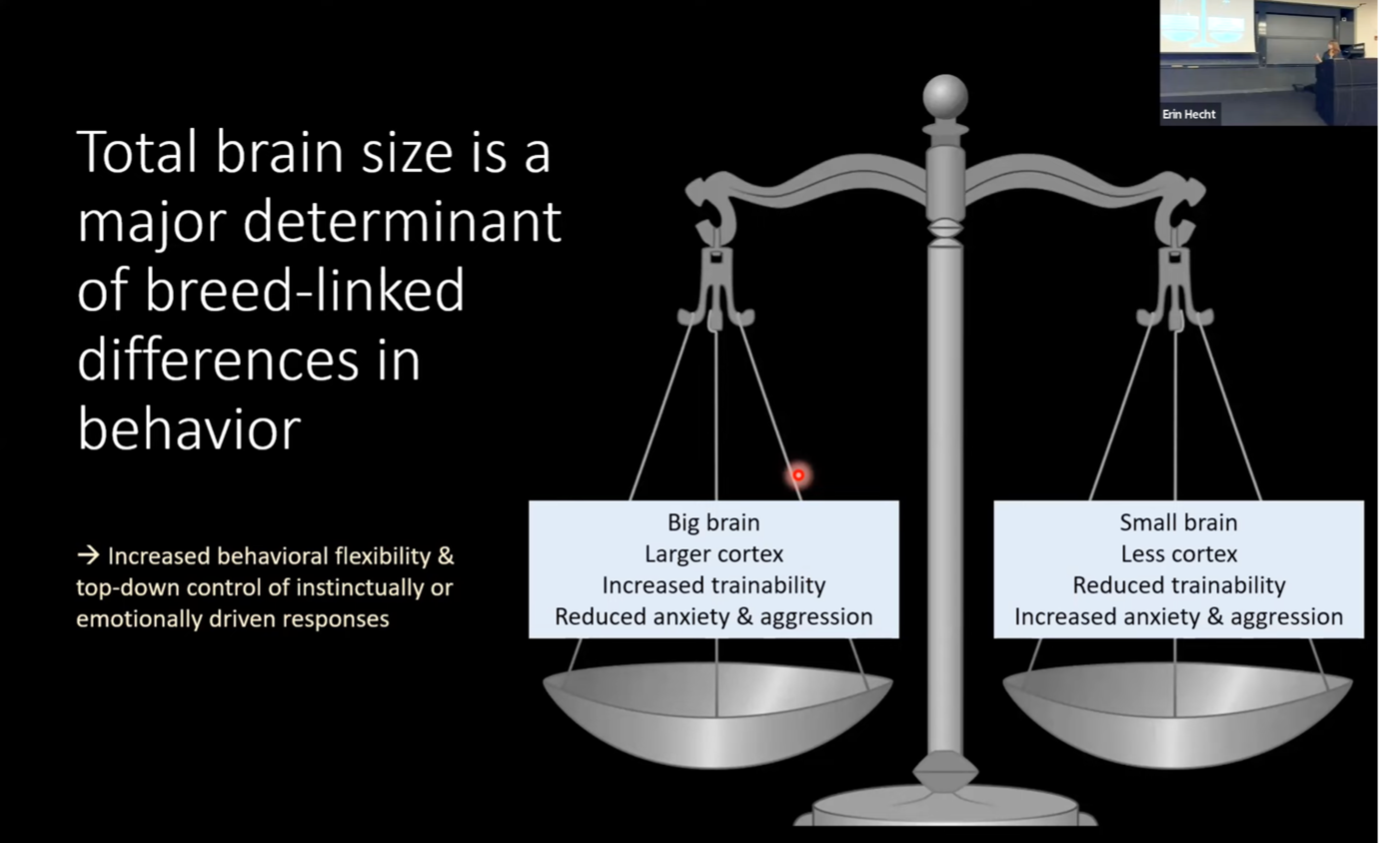
Golden Retrievers, Labradors and the Brain: Why They’re Built for Connection and CalmBy Gayle Haydon – Fairway Creek Retrievers, June 2025I watched a fascinating lecture today by Erin Hecht from Harvard University’s Canine Brain Research Facility. It really got me thinking about how this research applies to two breeds I love: the Labrador and the Golden Retriever.
According to Hecht and her team, dog brains are shaped differently based on their breed size and what the breed was originally developed to do. Labradors and Golden Retrievers, in particular, have distinct brain features that set them apart—and it all ties back to what they were bred for.1. Bigger Brain Regions for Emotional StabilityLabradors and Golden Retrievers have larger areas of the brain, especially the cortex, compared to smaller breeds like Chihuahuas, Dachshunds, and Yorkshire Terriers. The cortex plays a big role in managing fear and anxiety. Because this part of the brain is more developed in these retrievers, they tend to be calmer, more emotionally stable, and less reactive to stress or sudden changes in their environment.
This makes them ideal for roles as therapy dogs, assistance animals, and reliable family companions. They’re naturally more predictable, confident, and resilient.2. A Brain Built for Human ConnectionAnother standout feature of the retriever brain is its enhanced ability to understand human cues. Labradors and Goldens are naturally better at picking up on things like facial expressions, tone of voice, and body language.
This means they “tune in” to people effortlessly. That emotional connection helps them form strong bonds and makes them incredibly responsive to human needs—a crucial trait for therapy and assistance work.3. Exceptional Trainability and FocusThese breeds also have a larger brain area dedicated to learning and trainability. This, paired with their strong visual focus, makes them fast learners who can master commands with less repetition than many other breeds.Originally developed for hunting, their brains evolved to excel at tasks requiring focus, obedience, and coordination. Today, those same traits translate beautifully into assistance work, therapy roles, and life as a well-behaved family dog.Interestingly, working breeds like Border Collies also have strong learning brains—but theirs are wired more for motion and coordination, reflecting their herding backgrounds.A Human-Guided EvolutionDogs have been selectively bred by humans for centuries, each with a specific purpose. For Labradors and Golden Retrievers, that purpose was hunting and cooperation. Over time, this selective breeding has enhanced their brain structures in areas linked to emotional stability, human connection, and trainability.That’s why these breeds continue to be top choices for service roles and remain some of the most beloved family pets. Their brains have quite literally evolved with human help—to be in sync with us.
Understanding Your Puppy’s Mind – leading to success in trainingBy Gayle Haydon – Fairway Creek Retrievers, June 2025Welcoming a new puppy into your home is an exciting and emotional time. As a breeder, my job doesn’t end when you collect your puppy—it continues as you help them grow into the well-rounded companion you’ve dreamed of. One of the most important parts of raising a puppy is understanding how they learn.This guide will help you feel confident and informed, even if you’ve never trained a puppy before.
Your Puppy’s Learning Window: Why Early Weeks Matter Most
Puppies learn more in their first 16 weeks than they will at any other time in their life. These early weeks are crucial for shaping how they view the world. At Fairway Creek, we start Early Neurological Stimulation (ENS) and Early Scent Introduction (ESI) from as young as three days old. These gentle exercises help develop their brains, bodies, and senses. We then challenge our puppies with challenges that they learn to manage which builds their confidence.By the time they go home with you at 8 weeks, they’re already in the middle of the “socialisation window” – this is when they are most open to new experiences, people, sounds, and environments. Positive exposure now builds confidence later.
That’s why it’s so important to continue gentle, safe experiences: take them on car rides, introduce them to other friendly dogs, walk on diUerent surfaces, and let them hear new sounds like vacuum cleaners and lawnmowers.What Your Puppy is Telling You (Even Without Words):Puppies don’t speak our language—but they’re constantly communicating. Learning to read your puppy's signals helps avoid misunderstandings.Watch for:
• Yawning or lip licking – signs of stress or needing a break.
• Play bows (bum in the air, chest down) – an invitation to play!
• Tail wagging – context matters. A fast, high wag might mean excitement; a low, slow wag might mean worry.
• Turning their head or walking away – they might be politely saying “no thanks.”Tuning into these signals builds trust and helps you meet your puppy where they’re at
emotionally.Creating Connection: Why Positive Moments MatterYour puppy’s bond with you is everything. It’s what motivates them to learn and feel safe. This doesn’t mean spoiling them—it means creating a relationship based on consistency, gentle boundaries, and positive interactions.Use your voice, treats, play, and praise to reward the behaviours you like. Avoid harsh punishments. If you wouldn’t want a child to experience it, your puppy shouldn’t either.Training should feel like a game. Keep sessions short (just 2–5 minutes at a time!) and always end on a positive note.Setting the Stage for a Well-Behaved Pup – allow them to succeed:A good training environment sets your puppy up for success.
• Create a safe space like a crate or playpen. It’s not a punishment—it’s a puppy’s bedroom, a place to rest and reset.
• Use baby gates to limit their access. This helps prevent bad habits like toilet accidents or chewing furniture.
• Have clear routines for meals, toilet breaks, play, and sleep.
• Use positive reinforcement—reward what you like, ignore what you don’t (or
redirect it).Be proactive. If your puppy is chewing a shoe, calmly remove it and oUer a chew toy. Training isn’t about reacting—it's about setting up the environment to help them succeed.Why Your Puppy’s Breed Personality Shapes Their Learning Style:Labradors and Golden Retrievers are clever, affectionate, and people-pleasing—but they’re also high-energy and easily distracted, especially when young. They love to use their noses and mouths, which can mean chewing and digging if they’re bored.Other breeds may have diUerent drives. For example, herding breeds are more motion- sensitive and can be nippy.Know that your puppy’s instincts were shaped by generations of breeding. We can guide them, not erase them. Work with your puppy’s natural tendencies, not against them.Final Thoughts:Puppy training isn’t about control—it’s about understanding. It’s about setting your dog up for success so they can grow into the calm, confident companion you want by your side.And remember, you’re never alone in this journey. At Fairway Creek, I’m always here to support you—whether it’s your first puppy or your fifth.
Happy training, and enjoy the journey—it’s a beautiful one.
~ Gayle
🛒 Recommended Puppy Essentials
• Playpen – Keeps your puppy safely contained while giving them space to play and rest. Great for managing independence and avoiding accidents when you’re not watching them.• Crate – Helps with toilet training, routine, and creating a safe space for sleep. Promotes calm and security.• Bed – A comfy, dedicated sleeping spot helps establish routine and gives your pup a place to feel safe and relaxed.• Gate – Ideal for blocking off stairs or rooms to keep your puppy safe while still giving them freedom to explore.• Brush – Regular brushing supports coat health, reduces shedding, and gets your puppy used to grooming.• Nail clippers – Essential for keeping nails short and safe. Regular trimming prevents discomfort and paw issues.• Shampoo – A gentle puppy shampoo helps maintain skin and coat health while keeping your pup smelling fresh.• Wipes – Great for quick cleanups between baths—especially paws, eyes, and bums.• Lyka treats – Healthy, natural treats perfect for training and rewards. High-value options help motivate good behaviour.• Long leash – Perfect for training recall and giving your puppy more freedom safely during walks and park visits.• Puppy training book – A go-to resource for tips, routines, and behaviour troubleshooting, especially for first-time owners.• Non-slip stainless steel bowls – Durable, hygienic, and easy to clean. Non-slip base helps prevent mess at mealtime.• Lick mats – Promote calm and reduce anxiety. Great for enrichment during crate time or grooming.• Snuffle mats – Encourages natural foraging instincts, slows down eating, and provides mental stimulation.• Dog seat cover – Protects your car seats from fur, scratches, and accidents during travel.• Travel water bottle – Makes it easy to keep your puppy hydrated during walks, road trips, and outings.🛍️ Our Must-Have Puppy EssentialsWe’ve put together a list of the top items we recommend for your puppy’s first few months—based on what we use and love ourselves.Follow the links below to explore our go-to products and see exactly what we suggest for a smooth and happy start with your pup. 🐾
Early training for puppies – Setting them up for successBy Gayle Haydon – Fairway Creek Retrievers, June 2025Early Neurological Stimulation and Early Scent Introduction:
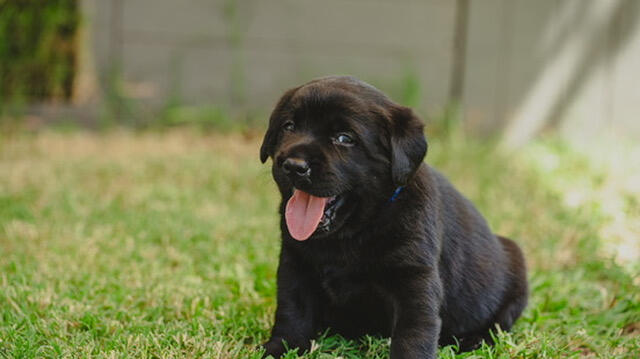
In the first days of a puppy's life, the significance of early neurological stimulation cannot be overstated. From just three days old, these babies are embarking on a massive journey of development, both physically and mentally. Early neurological stimulation involves gentle, purposeful interactions that ignite vital neurological pathways that fosters resilience, adaptability, and overall well-being in the growing pup. Early Scent Introduction is the exposure of different scents to your puppy. This practice is especially beneficial for working dogs, such as search-and-rescue dogs and service dogs, but can also help pet dogs develop confidence and adaptability. Puppies exposed to various smells from a young age tend to be more adaptable to new environments and experiences.
Physical and Mental Challenges:
At approximately 4/5 weeks old, at Fairway Creek, we take our training a step further and do physical and mental challenges with our puppies. We have designed our puppy maze with structured challenges that assess and enhance our puppies problem solving abilities and resilience. The more challenges they face and conquer, the more confident and resourceful your dogs will be. We developed our maze following the research of Bonnie Bergin, an American canine researcher. Bergin founded the Canine Companions for Independence, the first program to train assistance dogs. Many institutions and organisations use puppy mazes and challenges in the world of Assistance and therapy dogs.Puppies are taken on 'adventure walks' around our house paddock to ensure they learn to follow and learn through their sense of smell all aspects of the walk. We call this their 'snifari'.
The Best Start in Life:
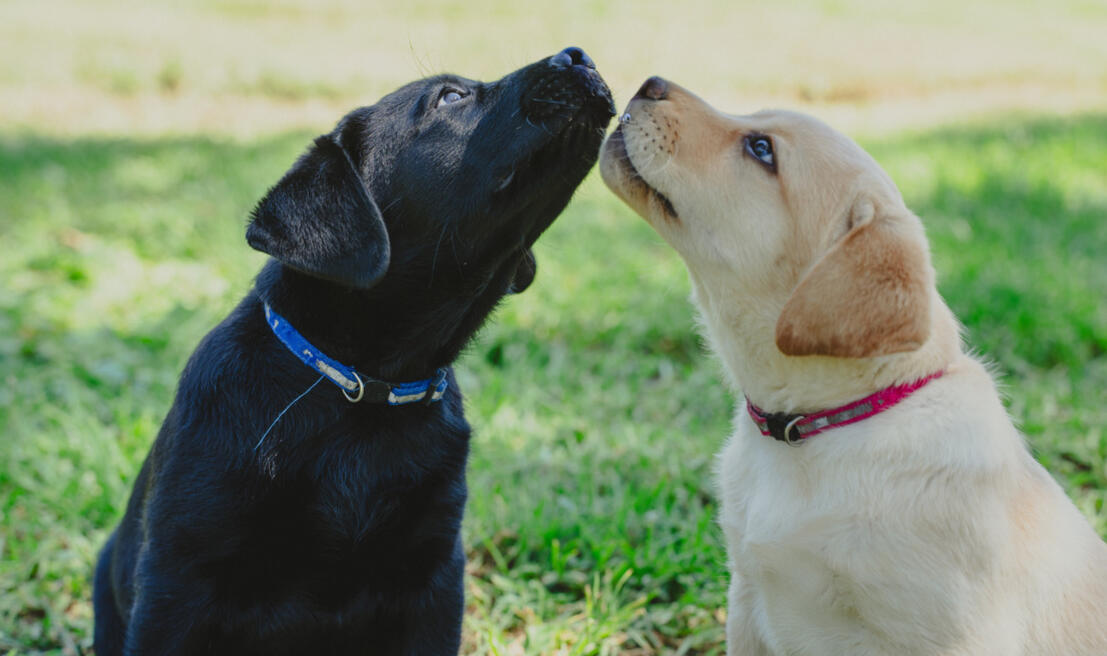
Great breeders will practice these early training techniques to ensure that your puppy has the absolute best start in life. We want your puppy to have the best emotional development so that when you take him or her home, there will be little or no surprises. The challenging situations that they do encounter will be managed well with reassurance from the people they trust.
Breeders who do this type of training want your puppy to be a confident and resilient dog who is easily trainable – hence the time and effort that is put into your growing puppy. We do a lot of training and practice for your puppies to learn to come, sit, be comfortable with crate training, toileting, halti wearing, following, showering, water play, nail clipping and grooming as well as getting them to focus on us.

Continued training - allowing your puppies to maximise their potential:
Puppy training and socialisation must be continued once you get your puppy into your home. The more situations that you expose your puppy to in these early weeks and months will solidify the training any training that has been done by your breeder. After all, they have put so much time into your puppy and ultimately they want your grown retriever to be a confident, well mannered and well socialised dog. That’s why they do this training to start with.
With love, attention and proper training from a new family, puppies will grow into well- adjusted and happy companions, eager to explore their new surrounding. Early training provides a strong foundation for learning - setting puppies up for success, while ongoing guidance and training from forever families ensure they reach their full potential.
8 Easy Commands to Teach Your DogYour must-know guide for a well-behaved, happy pup!Bringing home a new puppy is pure magic — but it can also be a little overwhelming. The good news? With a few simple commands, you’ll be on your way to building a strong, trusting bond and a calm, confident dog 🐾Whether you’re training a Golden Retriever, Labrador, or any new furry family member, these 8 beginner commands are essential for everyday life and long-term success.Let’s get started!⸻🎓 1. SITGoal: Teach your dog to lower their bottom to the ground on command.Steps:
1. Hold a treat close to your pup’s nose.
2. Slowly move your hand upward — as their head lifts to follow, their bottom will naturally lower.
3. As soon as they sit, say “Sit” and reward immediately.
4. Practice for a few minutes daily in short sessions.Why it matters: This is the foundation for more advanced behaviours and helps with impulse control.⸻🎓 2. STAYGoal: Your dog remains in place until released.Steps:
1. Start by asking your dog to sit.
2. Show an open palm (like a “stop” sign) and say “Stay.”
3. Take one small step back.
4. If they remain still, say “Yes!” and reward.
5. Gradually increase your distance and duration.
6. Always use a release cue like “Okay!”Why it matters: Keeps your dog safe in situations like crossing roads or waiting at the door.⸻🎓 3. LIE DOWNGoal: Teach your dog to lie flat on the ground.Steps:
1. Start from a seated position.
2. Move a treat from their nose down to the ground, then slowly outward.
3. As they follow the treat, their elbows should drop.
4. Say “Lie down” and reward.
5. Don’t force — let them figure it out with gentle repetition.Why it matters: Helps your dog settle and stay calm when needed.⸻🎓 4. BED / PLACEGoal: Send your dog to a specific mat or bed.Steps:
1. Lure your dog onto the bed or mat with a treat.
2. Once all four paws are on, say “Bed” or “Place.”
3. Reward them and encourage them to lie down.
4. Practice from short distances until they go there on cue.Why it matters: Perfect for teaching boundaries, especially when guests are over or during dinner time.⸻🎓 5. PAW / SHAKEGoal: Your dog gives their paw to your hand.Steps:
1. Hold a treat in a closed fist.
2. When they paw at your hand, open it and reward.
3. Add the word “Paw” or “Shake” as they repeat the behaviour.
4. Reward every successful try.Why it matters: A fun bonding trick and great for socialising!⸻🎓 6. OUTSIDEGoal: Dog understands the word “outside” means it’s time to go out (often for toilet breaks).Steps:
1. Say “Outside” every time you open the door.
2. Calmly praise when they walk through.
3. Over time, they’ll associate the word with heading outdoors.
4. You can pair it with a doorbell or bell if you’re crate or toilet training.Why it matters: Establishes routine and reduces indoor accidents.⸻🎓 7. DON’T JUMPGoal: Teach polite greetings (no jumping up).Steps:
1. Ignore jumping — no eye contact, touching, or speaking.
2. The moment they sit or stay grounded, say “Good” and reward.
3. Turn your back or walk away if they jump again.
4. Ask visitors to do the same.Why it matters: Encourages calm greetings and prevents scratched legs or knocked-over kids!⸻🎓 8. COMEGoal: Your dog runs to you when called.Steps:
1. Practice indoors or in a distraction-free space.
2. Say “Come!” in an upbeat, happy tone.
3. You can kneel or open your arms for encouragement.
4. Reward the moment they reach you — treats, toys, praise!
5. Never use “come” for negative situations (like nail trims!).Why it matters: A reliable recall is vital for safety, especially off-leash.⸻🐾 Final ThoughtsTraining takes patience — and lots of praise. These 8 basic commands will help you and your pup build mutual respect, trust, and great communication. Whether you’re working on manners, safety, or just bonding, these are the tools every dog parent should have in their toolkit.
Giving Puppies the Best Start: Why Early Training MattersBy Gayle Haydon: Fairway Creek Retrievers, June 2025The foundations we lay in the first weeks of a puppy’s life can have a profound and lasting impact on their development. Just like human children, puppies are shaped by their earliest experiences—what they see, smell, touch, and feel during these formative days creates the blueprint for the dog they will become.At Fairway Creek Retrievers, our early training approach is carefully designed and evidence-based. We incorporate Early Neurological Stimulation (ENS), Early Scent Introduction (ESI), and carefully planned age-appropriate physical and mental challenges to support our puppies’ development from the very beginning. This combination gives our pups a solid start—helping them grow into calm, confident, resilient, and easily trainable companions.Why We Do Early Training:
Our goal is to produce well-rounded dogs who are not only beautiful but emotionally and mentally prepared for life in a human world. By stimulating their brains and bodies in controlled, positive ways from as early as three days old, we help puppies build important neural pathways that influence learning, stress tolerance, and emotional stability.This isn’t just about giving them a head start—it’s about shaping their ability to handle life’s everyday challenges with confidence and calmness. The early days of development are a critical window when the puppy’s brain is most receptive to input. What we do during this time truly matters.How We Do Early Training:
Our program is based on research-backed techniques pioneered by leaders in the field, including Bonnie Bergin, the founder of Canine Companions for Independence—the first organisation to train assistance dogs. Her approach showed that a dog’s ability to become a calm, helpful, and adaptable partner starts with the right kind of early experiences.We apply this understanding through:
• ENS (Early Neurological Stimulation): A gentle five-step handling protocol introduced between days 3–16 to help puppies adapt to mild stress, building stronger heart rates, better resilience, and enhanced learning capacity.
• ESI (Early Scent Introduction): Starting at the same time, we introduce puppies to a range of safe scents daily to stimulate the olfactory system, improve scent discrimination, and enhance their working potential—especially valuable for dogs going into service, assistance, or detection roles.• Physical and Mental Challenges: As puppies grow, we provide safe but varied surfaces to walk on, tunnels to crawl through, mild obstacles to problem-solve, and new sounds and sights to process—all designed to build confidence and curiosity, not fear.The Outcome: Puppies Set Up for Success:
The outcome of this early training is clear. Puppies who have experienced ENS, ESI, and well-structured challenges are:• Calmer in new situations
• More confident around unfamiliar sights, sounds, and people
• Better at handling stress
• Easier to train
• Quicker to bond with their people
They’re more likely to grow into well-adjusted adult dogs who thrive in busy households, in working roles, or simply as loyal companions.But this is only the beginning.To reach their full potential, ongoing training in the forever home is essential. Our role as breeders is to give them the best possible start—but your role as their new owner is to continue the journey. Through consistent handling, positive reinforcement, social exposure, and age-appropriate challenges, you’ll help your puppy grow into the dog they were bred to be.At Fairway Creek, we believe early training isn't an option—it's a responsibility. It’s how we honour our puppies, their future families, and the legacy of intentional, thoughtful breeding.
🧶 Rope Toy
Great for tug-of-war and teething relief. Helps clean teeth and build bite strength.🦷 Chew Toys for Puppy Teething
Soothes sore gums during the teething phase while promoting healthy chewing habits.⚽ Interactive Dog Ball
Moves or makes sounds to keep curious pups mentally stimulated and physically active.🎾 Chuckit Balls – 2pk
Durable and bouncy — perfect for high-energy fetch games that promote exercise.🧩 Dog Puzzle
Mentally enriching toy that challenges your pup to problem-solve for treats.🐶 KONG – Teething Toy
Veterinarian-recommended classic toy for teething puppies. Fill with treats or peanut butter for extra fun.🦆 Crinkle Toy
No stuffing, no mess! Great for curious pups who love playful crinkle sounds.🦌 Dog Antler – Lasting Dog Treat Chew
Long-lasting and all-natural — a tough chew that satisfies and supports dental health.🪩 Automatic Bouncing Ball
Self-activating and unpredictable movement keeps dogs engaged even when you’re busy.🌿 Snuffle Mat
A scent-based puzzle that mimics foraging — slows down fast eaters and provides mental stimulation.🍖 Treat Ball Dog Chew – Enrichment Toy
Combines chewing with treat rewards. Perfect for keeping puppies focused and content.🧠 Treat Dispensing Puzzle Toy
Stimulates problem-solving and extends mealtime while reducing boredom-related behaviour.🛡️ Dog Chew Toy for Aggressive Chewers
Built for power chewers. Tough and durable, perfect for strong jaws and heavy teething.We personally use and recommend every single product listed with our own dogs! These toys and enrichment tools support healthy teething, mental stimulation, and active play — all essential for raising happy, well-rounded puppies. Follow the links below to explore and purchase our favourites today!puppytoys
Understanding the Difference: Assistance, Therapy, Companion Dogs & Family PetsGayle Haydon: Fairway Creek Retrievers July 2025Why the distinction matters in Australia
I’m often asked whether our puppies can become assistance dogs, therapy dogs, or companions for people with special needs. While many of our puppies have the potential to become something very special, it’s important to understand the distinct di.erences between each role—especially here in Australia, where these definitions carry legal, ethical, and training-based weight.Read on so that you can have an understanding of what each type of dog is, what training and qualifications they require, and how they differ from a beloved family pet.
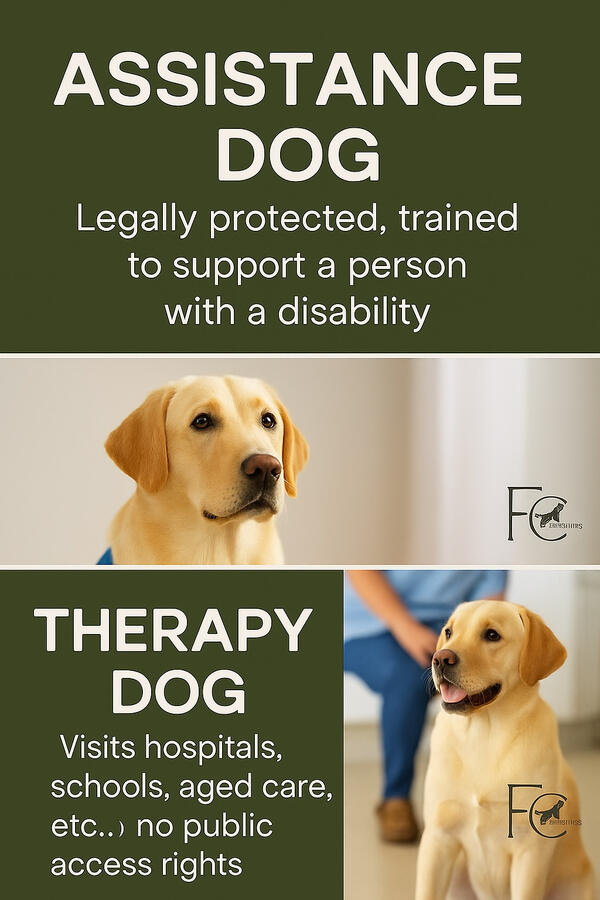
Assistance Dog (Service Dog):
An Assistance Dog is a highly trained, legally recognised working dog that helps a person with a disability live more independently. These dogs are protected under
the Disability Discrimination Act 1992 (DDA), meaning they have full public access rights. That includes access to shops, restaurants, public transport, and even planes.They undergo extensive training (often 1.5–2 years) through a certified program or private trainer and must pass a Public Access Test (PAT) to demonstrate they are safe, unobtrusive, and perform reliable, necessary tasks related to a person’s specific disability.These dogs are a vital part of a person's medical management and independence.
Therapy Dog:
A Therapy Dog is trained to provide comfort, aCection, and emotional support to groups of people in environments like schools, hospitals, aged care homes, or mental health programs.They do not have legal public access rights in Australia like assistance dogs do. Instead, their visits are arranged with permission and are part of supervised programs. Therapy dogs need to be calm, non-reactive, patient, and enjoy meeting all sorts of people, including children and the elderly.Think of therapy dogs as emotional healers — they’re incredibly valuable, but their role is very different to that of a working assistance dog.
Companion Dog:
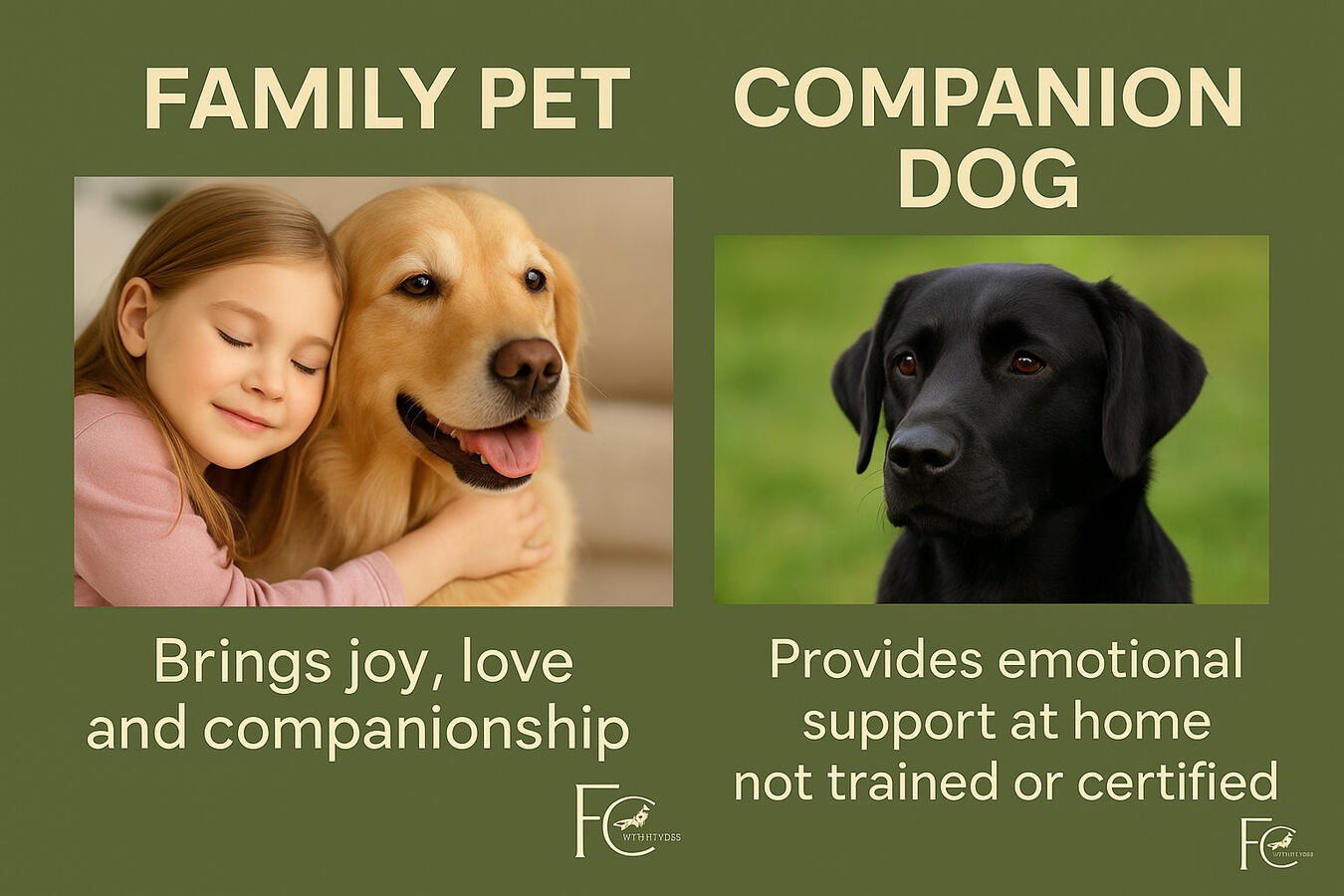
A Companion Dog provides individual comfort and emotional support, often to someone living with anxiety, depression, or loneliness. They may be purchased or selected with this purpose in mind, but they are not formally trained, assessed, or certified in any way.Because of this, they don’t have any public access rights under Australian law. They live in private homes, and it’s important they receive basic training and socialisation to be well-adjusted pets — especially in emotionally sensitive environments.
Family Pet:
At the heart of most homes is a loving family dog — and that’s something truly special. A well-bred, well-raised pet brings joy, comfort, and a sense of connection that supports the wellbeing of everyone in the home, from toddlers to grandparents.Family pets may not have formal roles, but when thoughtfully raised and properly trained, they become calm, resilient, and intuitive members of the family.
Setting Up Our Puppies for Success:
At Fairway Creek Retrievers, we use research-backed early development protocols including ENS (Early Neurological Stimulation), ESI (Early Scent Introduction), and carefully structured physical and mental challenges that begin in the whelping box.These early experiences help our puppies grow into confident, emotionally stable, and adaptable dogs — traits essential in all dogs, but especially important for those moving into working, therapy, or companion roles.We raise every litter with purpose, aiming to give our puppies the very best start in life, whether their future holds a working vest, a therapy visit, or a snuggle on the couch with your kids.
Why the Difference Matters:
In Australia, it’s not just about labels — there are legal, ethical, and social responsibilities that come with each title. Misunderstanding or misusing the terms “assistance” or “therapy” dog can have real consequences, including legal issues and barriers for those who rely on certified dogs for daily independence.If you’re looking for a puppy for a particular purpose — or simply want a confident, easy going companion for your family, Fairway Creek Retrievers may be able to help you find your perfect puppy.